If you’ve scheduled an AC tune-up or repair lately, you’ve probably heard your technician mention R410A refrigerant. This cooling agent plays a critical role in keeping your home comfortable during Arizona’s scorching summers. Understanding what R410A is, how it works, and why it matters can help you make informed decisions about your HVAC system’s maintenance and future.
While refrigerant issues aren’t something homeowners should attempt to fix themselves—handling refrigerants requires EPA certification and specialized equipment—knowing the basics empowers you to recognize potential problems. Plus, it helps you communicate better with your HVAC professional.
What Is R410A Refrigerant and How Does It Work?
R410A is a hydrofluorocarbon (HFC) refrigerant that has become the industry standard for residential air conditioning systems manufactured since 2010. Unlike its predecessor R22 (also known as Freon), R410A doesn’t contain chlorine. This means it’s significantly less harmful to the Earth’s ozone layer. That’s why the HVAC industry transitioned away from R22 beginning in the early 2000s, eventually phasing it out completely by 2020.
This refrigerant works by absorbing heat from inside your home and releasing it outdoors. The process happens in a continuous cycle: the refrigerant evaporates in your indoor unit’s evaporator coil, absorbing heat from your home’s air. Then it travels to the outdoor condenser unit where it releases that heat and condenses back into a liquid state. This cycle repeats over and over, keeping your living spaces cool and comfortable.
What makes R410A particularly effective is that it operates at higher pressures than older refrigerants. Because of this, systems designed for R410A need stronger, more robust components. You’ll notice that modern air conditioners are built differently than older models—they’re specifically engineered to handle these increased pressures safely and efficiently.
Signs Your AC Might Have a Refrigerant Issue
Refrigerant doesn’t get “used up” like gasoline in a car. In fact, your air conditioner is designed as a closed system that shouldn’t lose refrigerant under normal circumstances. If your AC is low on refrigerant, it typically means there’s a leak somewhere in the system. Recognizing the warning signs early can prevent more extensive damage to your HVAC equipment.
Your Home Isn’t Cooling Properly
When refrigerant levels drop, your air conditioner simply can’t absorb and transfer heat effectively. You might notice that certain rooms never quite reach the temperature you’ve set on your thermostat. Or that your AC runs constantly without achieving the comfort level you expect. In Cottonwood’s summer heat, this becomes obvious pretty quickly.
Ice Forms on the Refrigerant Lines or Evaporator Coil
It might seem counterintuitive, but low refrigerant actually causes ice to form on AC components. When refrigerant levels are too low, the remaining refrigerant gets too cold as it expands. This causes moisture in the air around the coils to freeze. If you see frost or ice on the copper lines running to your outdoor unit, that’s a red flag. This should prompt a call to a certified HVAC technician.
Higher Than Normal Energy Bills
An air conditioner low on refrigerant has to work much harder and run much longer to cool your home. This extra runtime translates directly to increased energy consumption. Of course, higher bills can have multiple causes. But when combined with other symptoms, refrigerant loss is often the culprit.
Hissing or Bubbling Sounds
If you hear unusual hissing or bubbling noises coming from your AC unit, you might be hearing refrigerant escaping through a leak. Hissing typically indicates gas escaping, while bubbling sounds can mean refrigerant is leaking in liquid form. Either way, these sounds warrant immediate professional attention.
Why You Should Never Attempt DIY Refrigerant Work
Unlike changing an air filter or cleaning debris from around your outdoor unit, anything involving refrigerant requires professional expertise. Federal law actually requires EPA Section 608 certification to purchase and handle refrigerants—and for good reason. Working with refrigerants involves significant safety risks and environmental responsibilities.
Refrigerant is under extremely high pressure. It can cause serious injury if released improperly. Additionally, even though R410A is better for the ozone layer than older refrigerants, it’s still a potent greenhouse gas. According to the EPA, releasing refrigerant into the atmosphere is not only illegal but also environmentally harmful. Licensed HVAC technicians have specialized equipment to recover, recycle, and properly handle refrigerants according to EPA regulations.
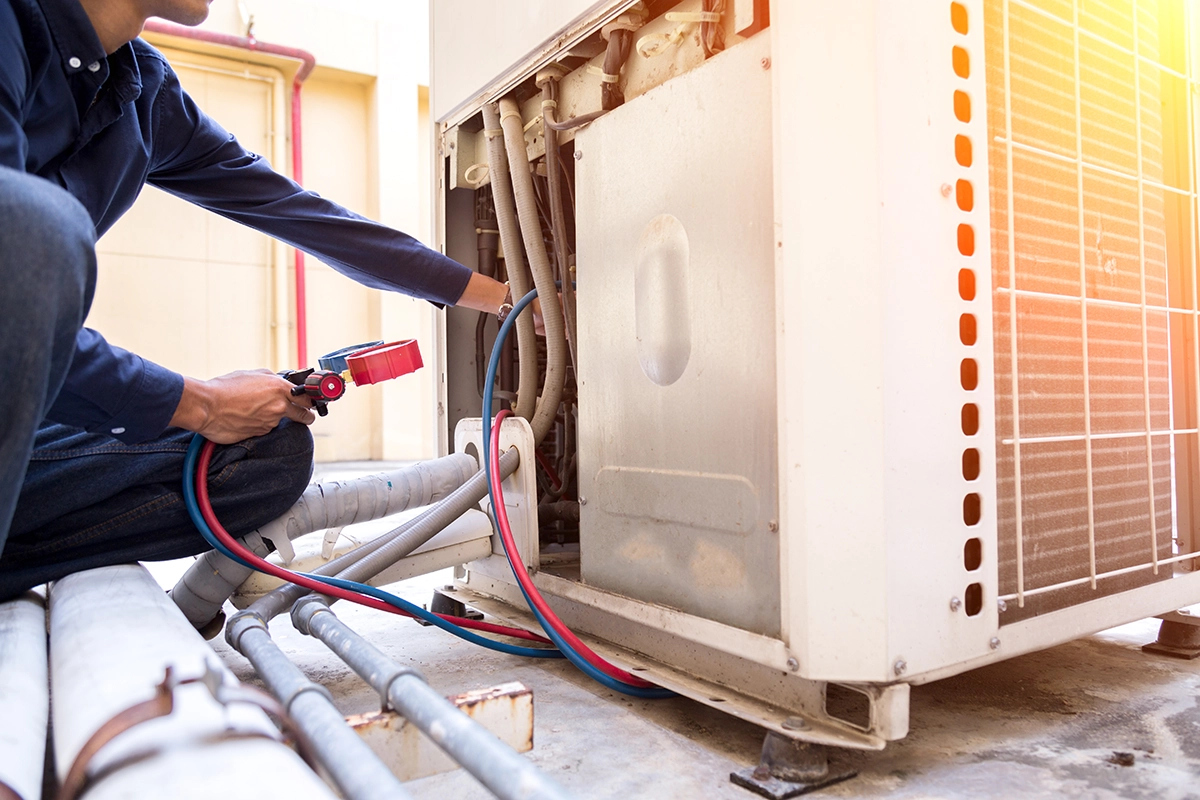
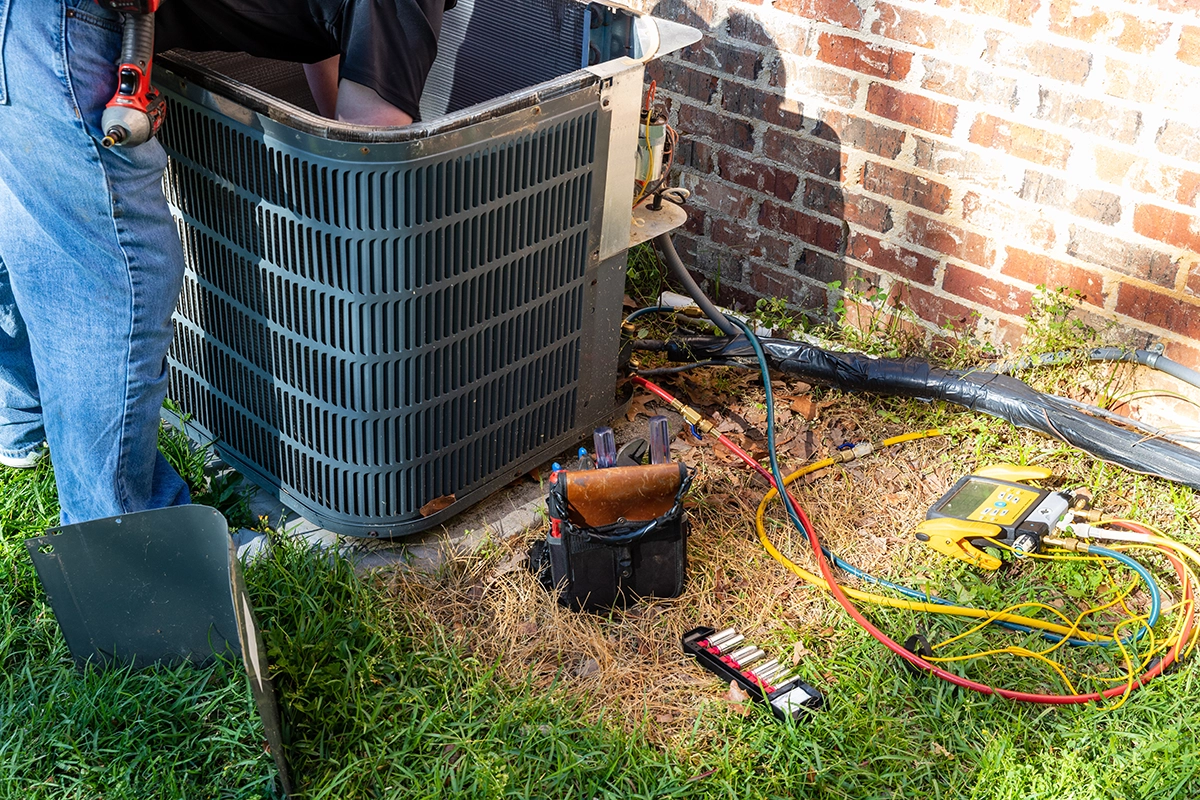
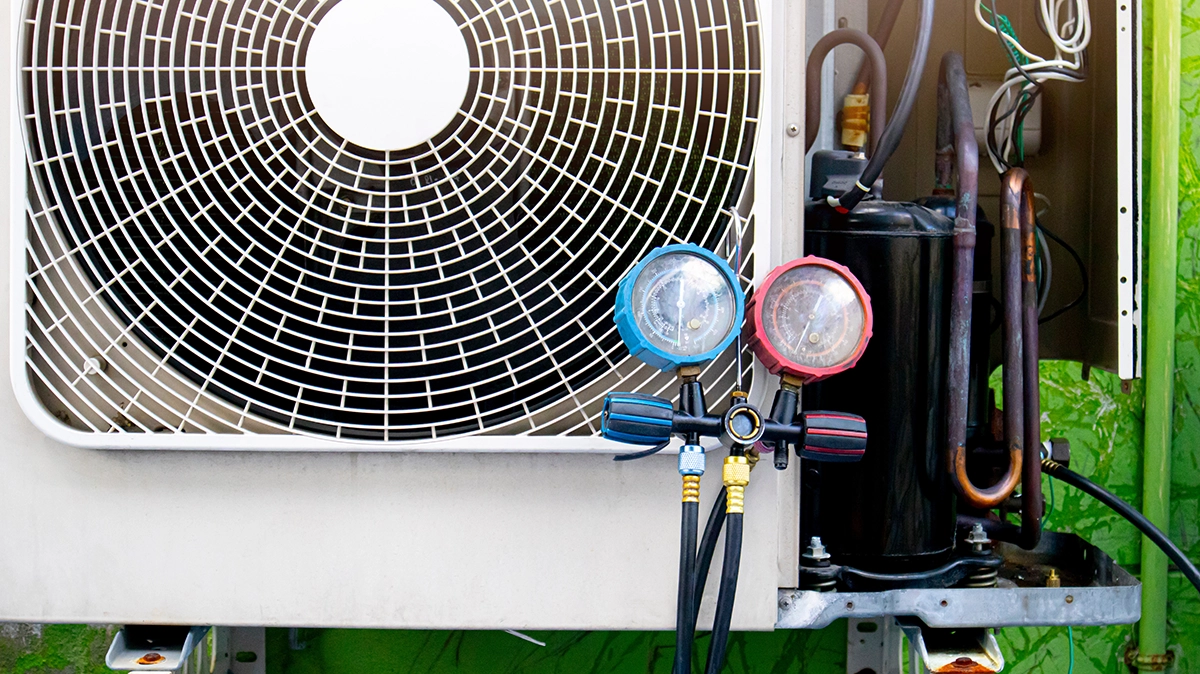
Beyond safety and legal concerns, diagnosing refrigerant issues requires specialized tools. A certified technician uses precise gauges to measure refrigerant pressures and determine whether levels are correct. We also have leak detection equipment to find even tiny leaks that wouldn’t be visible to the eye. Simply adding refrigerant without fixing the underlying leak is a temporary fix. This wastes money and doesn’t solve the real problem.
What Happens During a Professional Refrigerant Service
When you call Trio Quality Services about a suspected refrigerant issue, we start with a thorough diagnostic process. First, we measure refrigerant pressures to confirm whether the system is actually low. If it is, the next step is locating the source of the leak.
We use professional leak detection methods such as electronic leak detectors, UV dye, and soap bubble solutions to pinpoint the problem. Once we find the leak, we recommend the appropriate repair, whether that means replacing a valve, repairing a coil, or tightening connections. The right solution depends on the location of the leak and the extent of the damage.
After making the repair, we evacuate the system with specialized equipment to remove any remaining refrigerant, air, and moisture. Then we recharge it with the exact amount of R410A specified by the manufacturer. Too little refrigerant can reduce efficiency and cooling performance, while too much can damage the compressor. That’s why precise charging is such an important part of the repair process.
The Future of R410A and What It Means for Homeowners
While R410A is currently the standard refrigerant for most residential air conditioning systems, the HVAC industry is once again in transition. Newer refrigerants with even lower global warming potential are being introduced. R-32 and R-454B are two alternatives you might start hearing about more frequently.
If you have a system that uses R410A, there’s no immediate cause for concern. These systems will continue to be supported for many years to come. Refrigerant will remain available for servicing existing equipment. However, when it eventually comes time to replace your entire HVAC system, you’ll likely be looking at units that use these next-generation refrigerants.
The key thing to remember is that proper maintenance helps extend your current system’s lifespan. Regular tune-ups allow technicians to catch small leaks before they become major problems. Keeping your system well-maintained also ensures it operates efficiently. This saves you money regardless of which refrigerant it uses.
Protecting Your Investment Through Preventive Maintenance
Most refrigerant leaks develop slowly over time due to vibration, corrosion, or normal wear on system components. With a comprehensive maintenance plan, we can often catch these issues early. During a professional tune-up, we check refrigerant pressures as part of our standard service. If anything looks off, we can investigate further before it leads to comfort problems or system damage.
Preventive maintenance also addresses factors that can indirectly lead to refrigerant issues. For instance, a dirty evaporator coil forces your system to work harder, creating additional stress on components. Keeping coils clean, replacing filters regularly, and ensuring proper airflow all contribute to your system’s overall health.
Many homeowners in the Cottonwood area find that seasonal maintenance provides peace of mind. Ideally in spring before cooling season begins, this helps avoid emergency breakdowns during the hottest months. After all, discovering you have a refrigerant leak on a 105-degree day is far less convenient than addressing it during a scheduled maintenance visit. For professional HVAC maintenance and repairs in Cottonwood, AZ and the surrounding areas, contact Trio Quality Services.
Frequently Asked Questions About R410A Refrigerant
How long should R410A refrigerant last in my air conditioner?
Under normal circumstances, refrigerant should last the entire lifetime of your air conditioning system. AC units are sealed systems, so refrigerant doesn’t get consumed or wear out. If you’re losing refrigerant, it means there’s a leak that needs professional repair. Once a certified technician fixes the leak and recharges the system properly, the refrigerant should again last indefinitely. This is true as long as no new leaks develop.
Can I just add more refrigerant to my AC if it’s running low?
Simply adding refrigerant without finding and fixing the leak is just a temporary bandaid that wastes your money. Federal regulations also require proper licensing to purchase and handle refrigerants. More importantly, a certified HVAC technician needs to find the cause of the low refrigerant, repair the leak, evacuate the system properly, and recharge it with the exact amount specified by the manufacturer. Otherwise, the same problem will likely come back soon.
Is R410A refrigerant expensive to replace?
The cost of refrigerant service depends on several factors. These include how much refrigerant is needed and what repairs are necessary to fix any leaks. While R410A itself is moderately priced, the majority of the service cost comes from the skilled labor required. This includes properly diagnosing the problem, repairing leaks, and recharging the system correctly. Catching refrigerant issues early through regular maintenance typically results in lower overall costs than waiting until your system completely fails.
Will my old R22 system work with R410A refrigerant?
No, R410A and R22 are not interchangeable. Systems designed for R22 operate at different pressures and use different oils than R410A systems. Using R410A in an R22 system would likely damage or destroy the compressor and other components. If you have an older R22 system that needs refrigerant, a qualified technician can discuss your options. These might include continuing to service it with available R22 or evaluating whether system replacement makes more financial sense. This depends on the age and condition of your equipment.